

A global water treatment engineering firm sourced custom threaded FRP flanges and double-flange tees and elbows from China. Built with vinyl ester resin and rated 1.2–3 MPa, the parts moved from three sample runs to volume orders.
Table of Contents
Project Overview
Client Background & Needs
The client is a global water treatment engineering company with operations in the UK, South Africa, the US and beyond. Its projects span municipal water supply, sewage treatment and industrial water systems, where pipe connectors demand high corrosion resistance, pressure capacity and dimensional accuracy.
The client sought a China supplier able to build to drawing glass-reinforced plastic (FRP) flanges, double-flange tees and double-flange elbows. The parts had to withstand high-pressure conditions (1.2 MPa to 3 MPa), and some flanges needed a threaded port to connect hoses or instruments on site.
Custom Metal Molds: From Drawing to Tooling
Because the specifications were non-standard, the client commissioned us to build dedicated metal molds. Rather than simply copying the drawings, we reviewed the actual installation environment, medium flow rate and bolt pre-tension, then proposed optimizations for neck thickness, sealing-face angle and stiffener layout before finalizing the tooling.
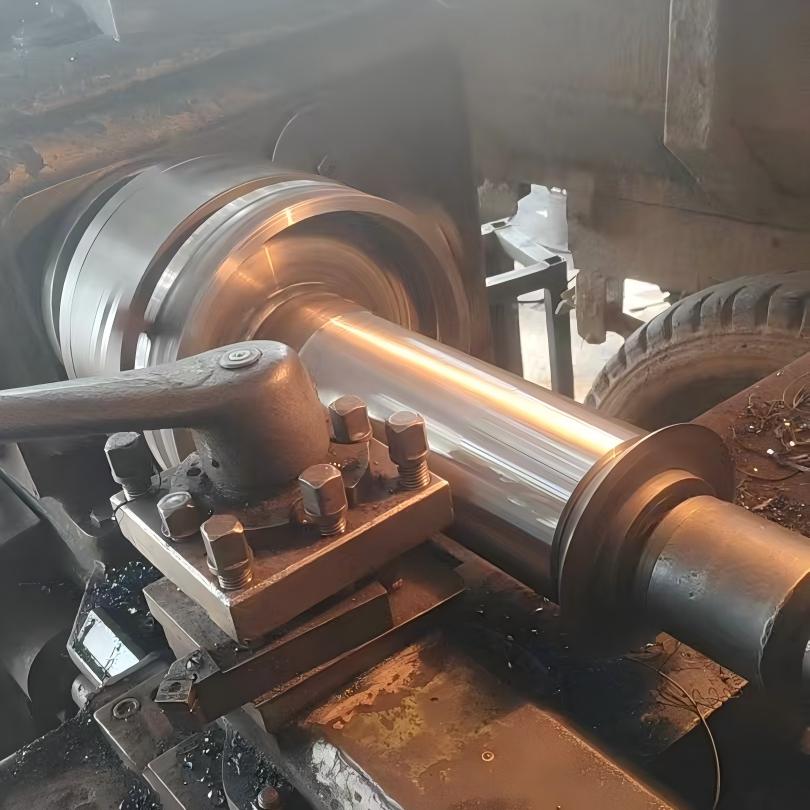
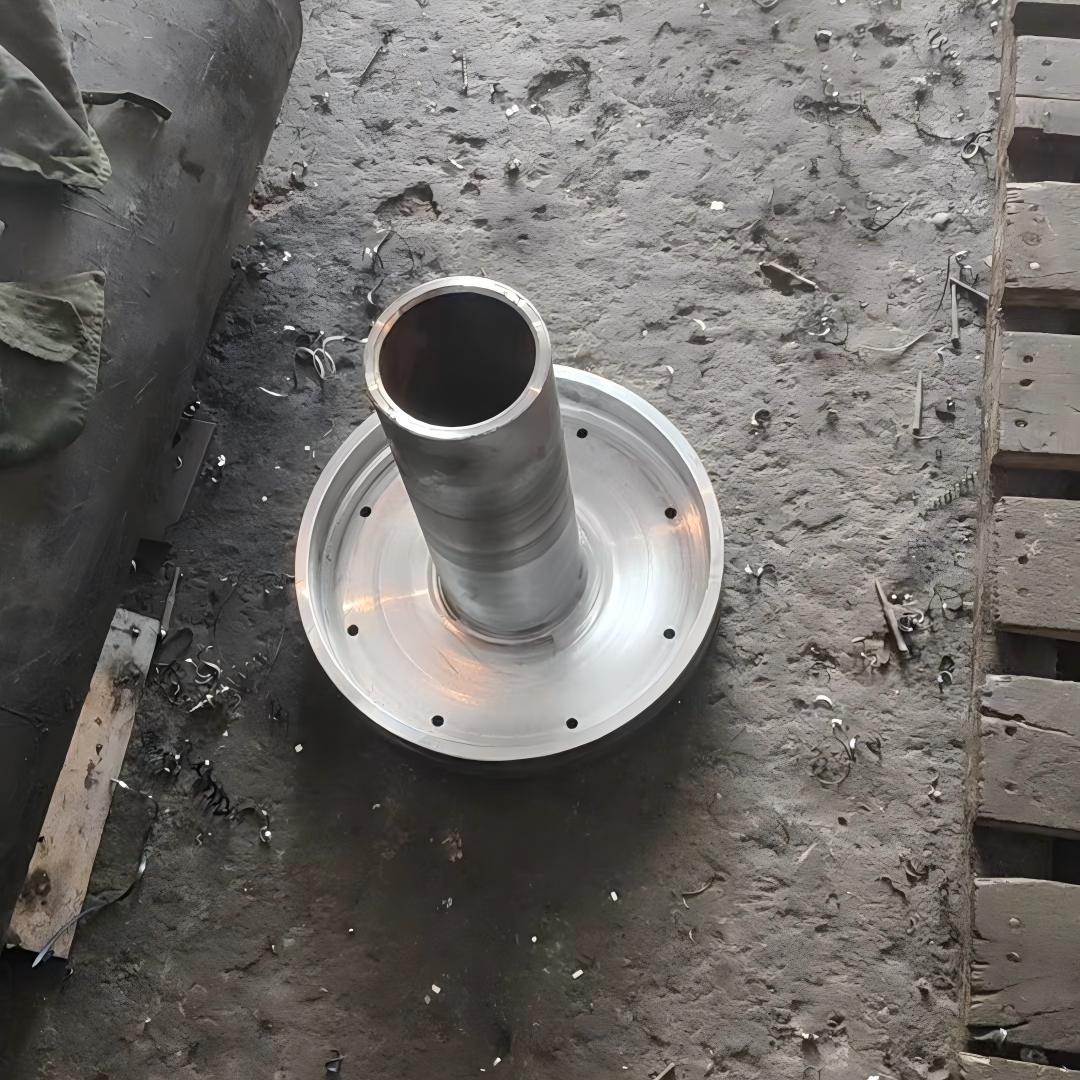
Product Solution: Threaded Flanges & Double-Flange Fittings
Based on the client’s drawings and our optimized scheme, we supplied the following FRP pipe connectors:
- Threaded flange: one side carries a threaded port for direct hose or instrument connection, enabling fast on-site assembly.
- Double-flange tee: three flanged ends for main-pipe branching, with even pressure distribution and reliable sealing.
- Double-flange elbow: two flanged ends to change pipeline direction, suited to corners in water treatment layouts.

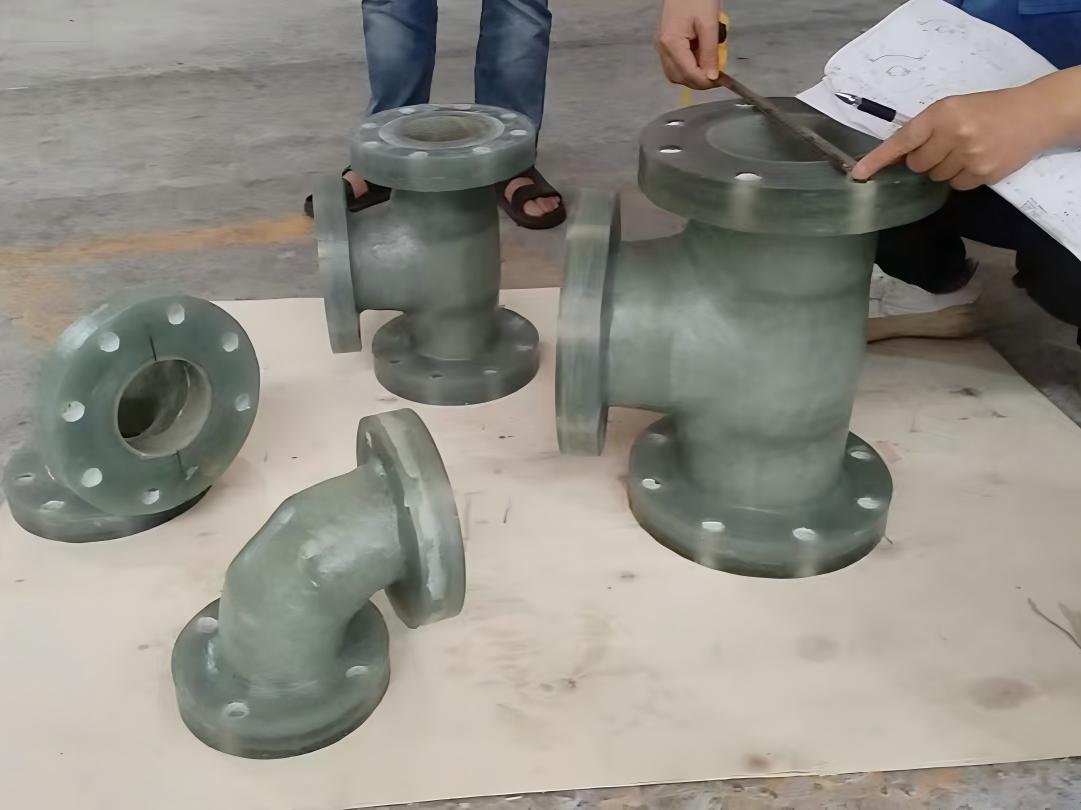
Material & Pressure Rating
The products use a vinyl ester resin FRP system. Compared with ordinary unsaturated polyester resin, vinyl ester offers superior resistance to acids, alkalis and chloride ions — ideal for water treatment and chemical environments. By controlling fiber lay-up angle and wall thickness, the pressure capability covers 1.2 MPa to 3 MPa.
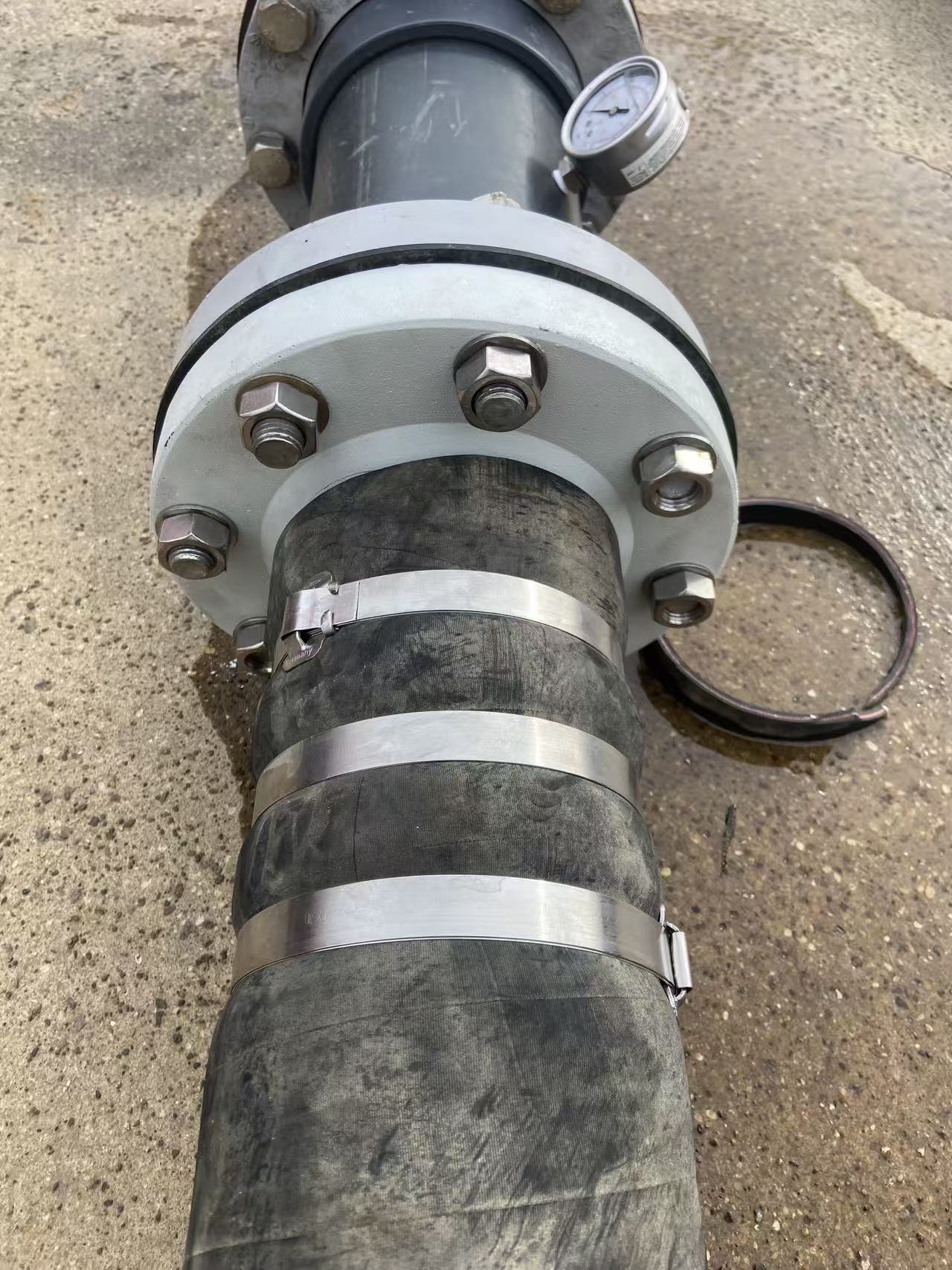
Production & Quality Control
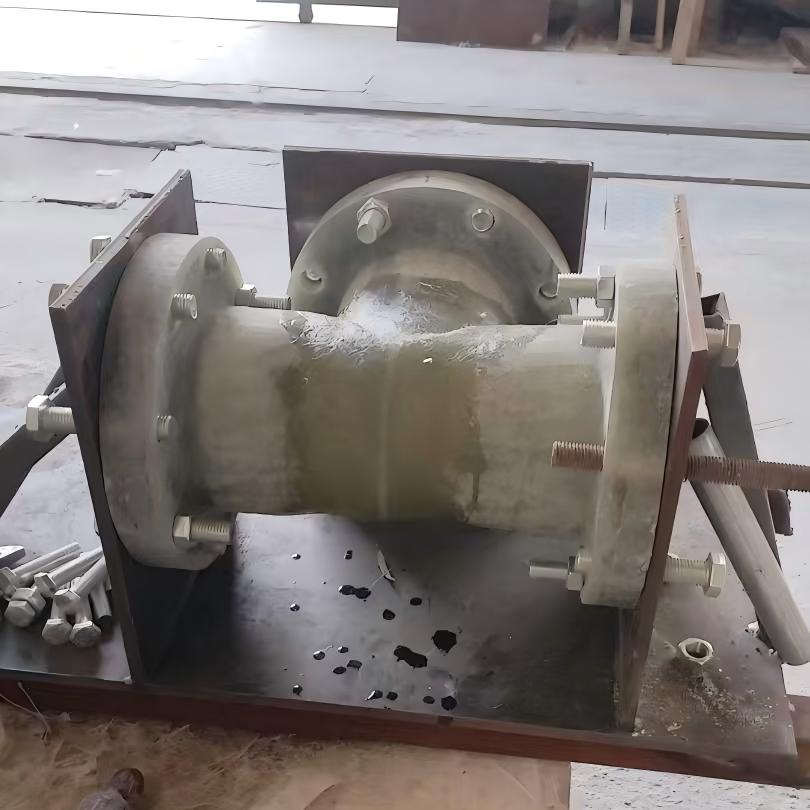
Each part is molded in the metal tool by hand lay-up or filament winding, then after cure and demolding goes through surface finishing, dimensional inspection, gel-coat spraying and hydrostatic testing — ensuring every shipment meets drawings and service requirements.


Production Video
The following is the real production process of FRP flanges and fittings, covering molding, finishing and surface treatment.
Packing & Shipping
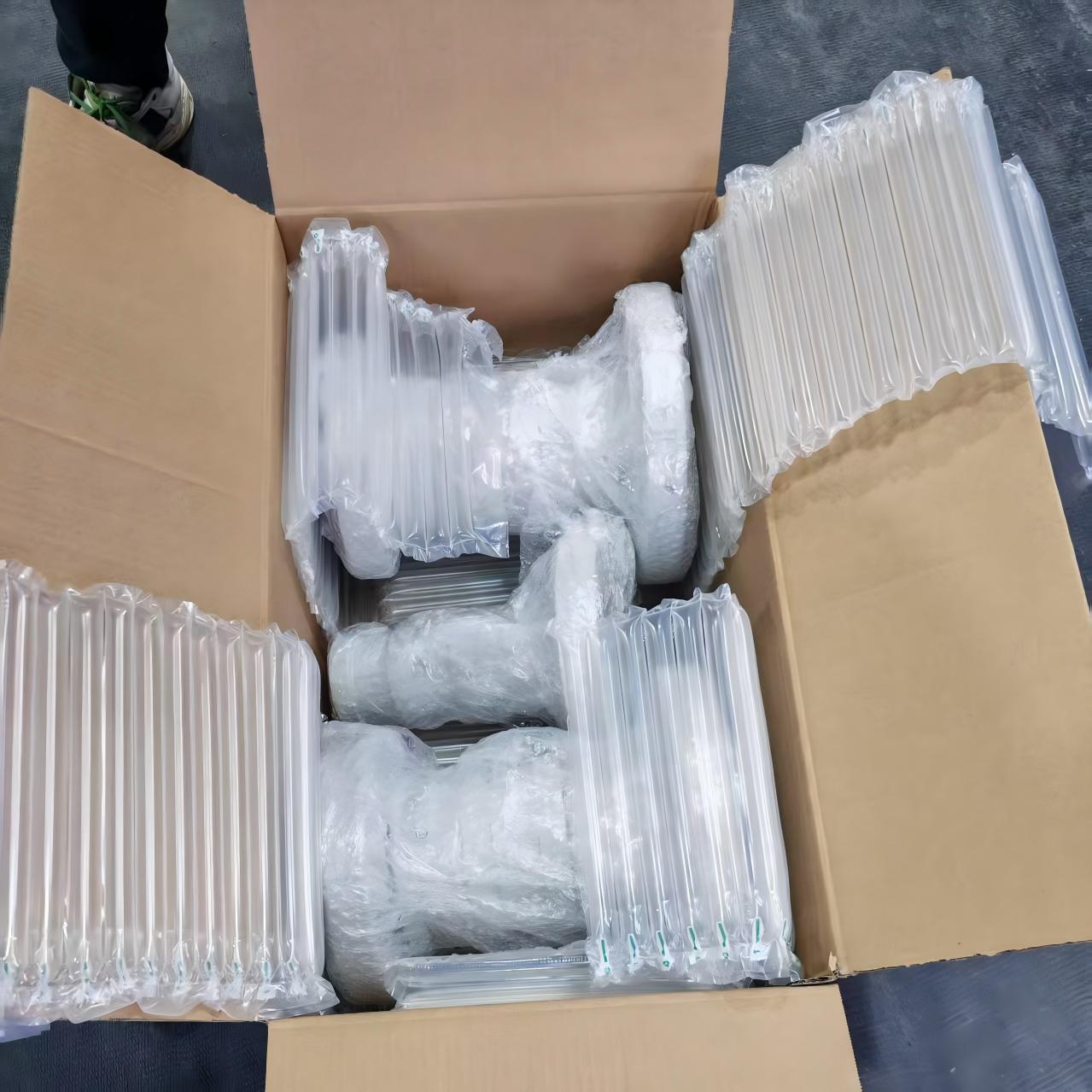
Finished parts are protected with bubble columns and stretch wrap before being packed into cartons, preventing transit damage to sealing faces and threaded ports so they arrive intact at overseas project sites.
Results
- The client placed three sample orders upfront and was satisfied with both quality and pricing;
- Beyond building to drawing, we proposed drawing optimizations based on the actual use case;
- After sample validation, the client moved into formal volume procurement;
- The parts are already running stably in water treatment projects across the UK, South Africa and the US.
Need custom FRP flanges or fittings?
We provide one-stop custom FRP pipe-connector services — from drawing review and mold development to volume production — supporting vinyl ester resin and a range of pressure ratings. Contact us for a quote and samples.