
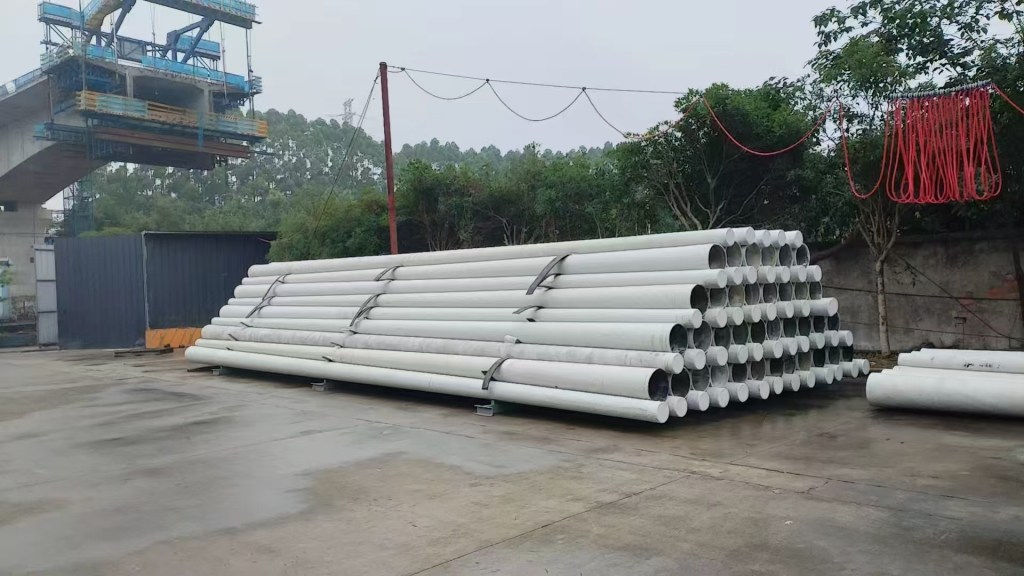
A Guyana client sourced FRP utility poles in 12 m and 10 m, filament-wound from epoxy vinyl ester resin and glass fiber. Lightweight and corrosion-resistant, they are drone-transportable and finished with a UV-resistant gel coat for longer outdoor service life.
Table of Contents
Project Overview
Client Background & Sourcing Needs
The client is based in Guyana, South America. As local power and infrastructure construction advances, much of the terrain is hard to reach by road and the climate is hot and humid. Traditional concrete or wooden poles are heavy, costly to transport and prone to corrosion or rot. The client therefore sought lighter, highly corrosion-resistant composite poles suited to complex terrain and long-term outdoor use.
- Needed both 12 m and 10 m common pole lengths, with load grades differentiated by use case;
- Required lightweight poles for easy transport and erection in mountainous and wetland areas with poor road access;
- Required corrosion- and weather-resistance for Guyana’s hot, humid, high-sunlight outdoor environment.
Product Solution: FRP Utility Pole
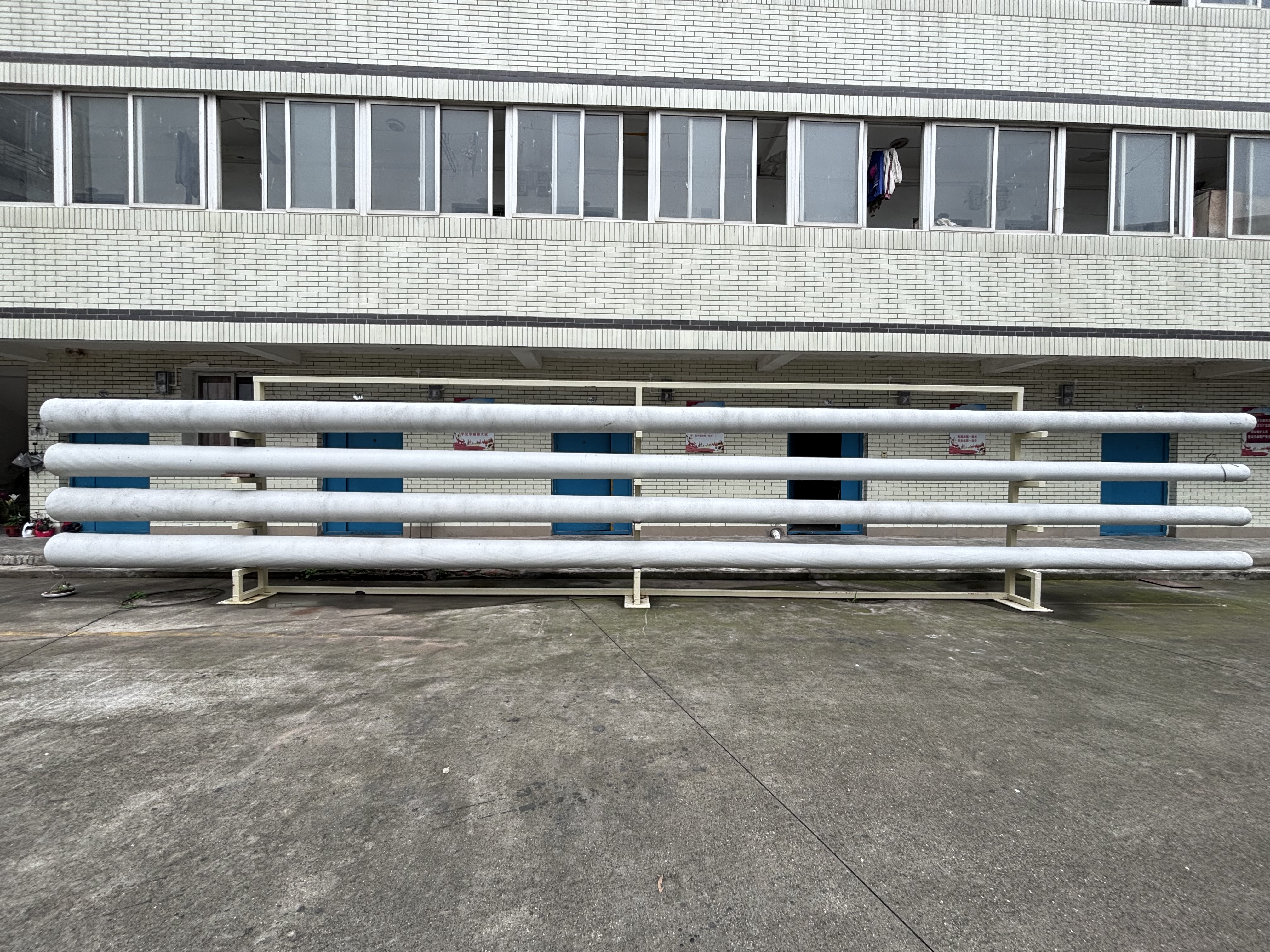
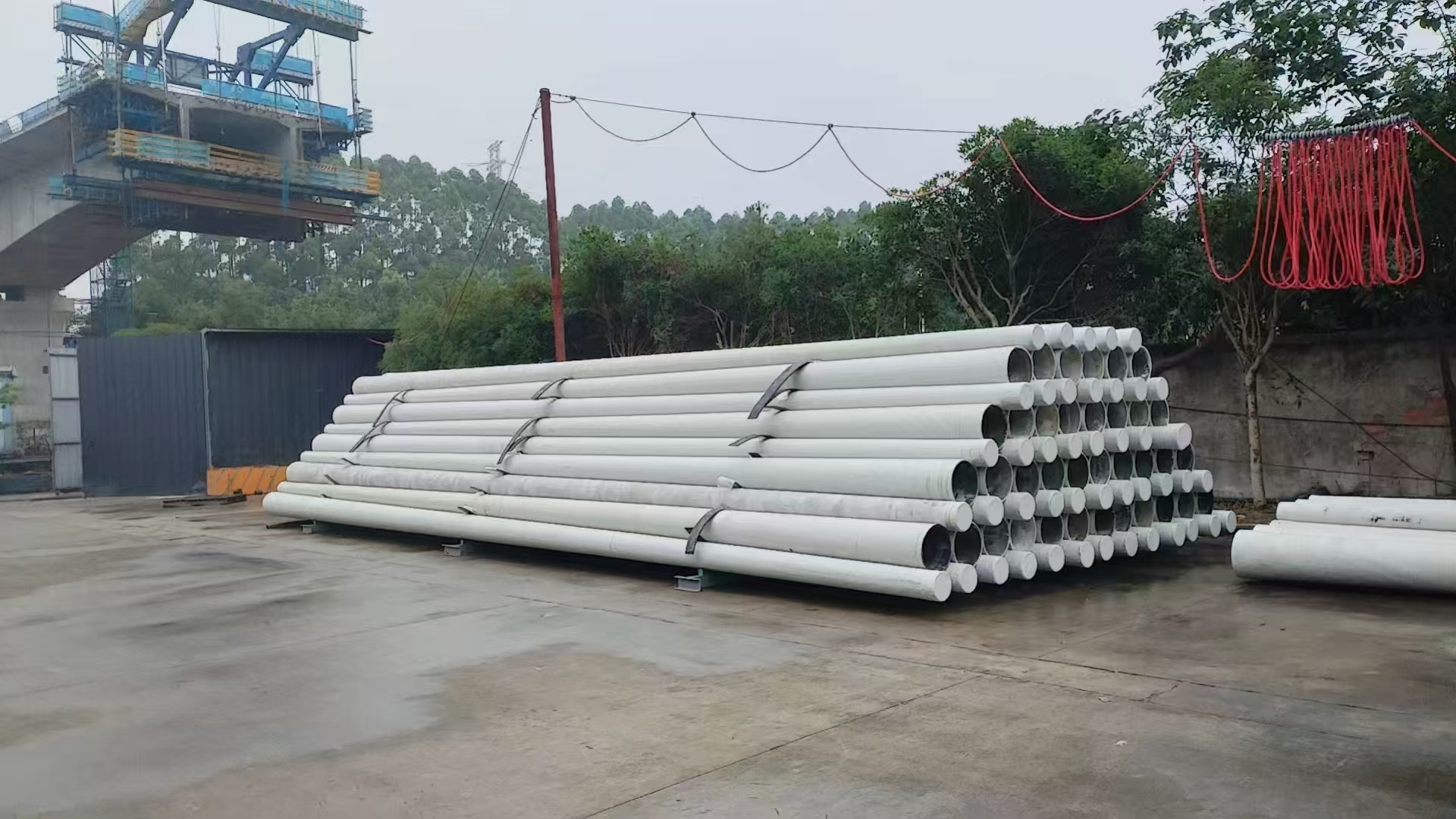
This batch of glass-fiber reinforced plastic utility poles comes in 12 m and 10 m, classified into A and B grades by overall weight so the client can select by line load and installation conditions. Surface treatment is completed before shipment, ready for on-site erection.

Key Advantages of the FRP Utility Pole
- Lightweight & corrosion-resistant: low-density composite avoids the rust and rot maintenance of traditional poles;
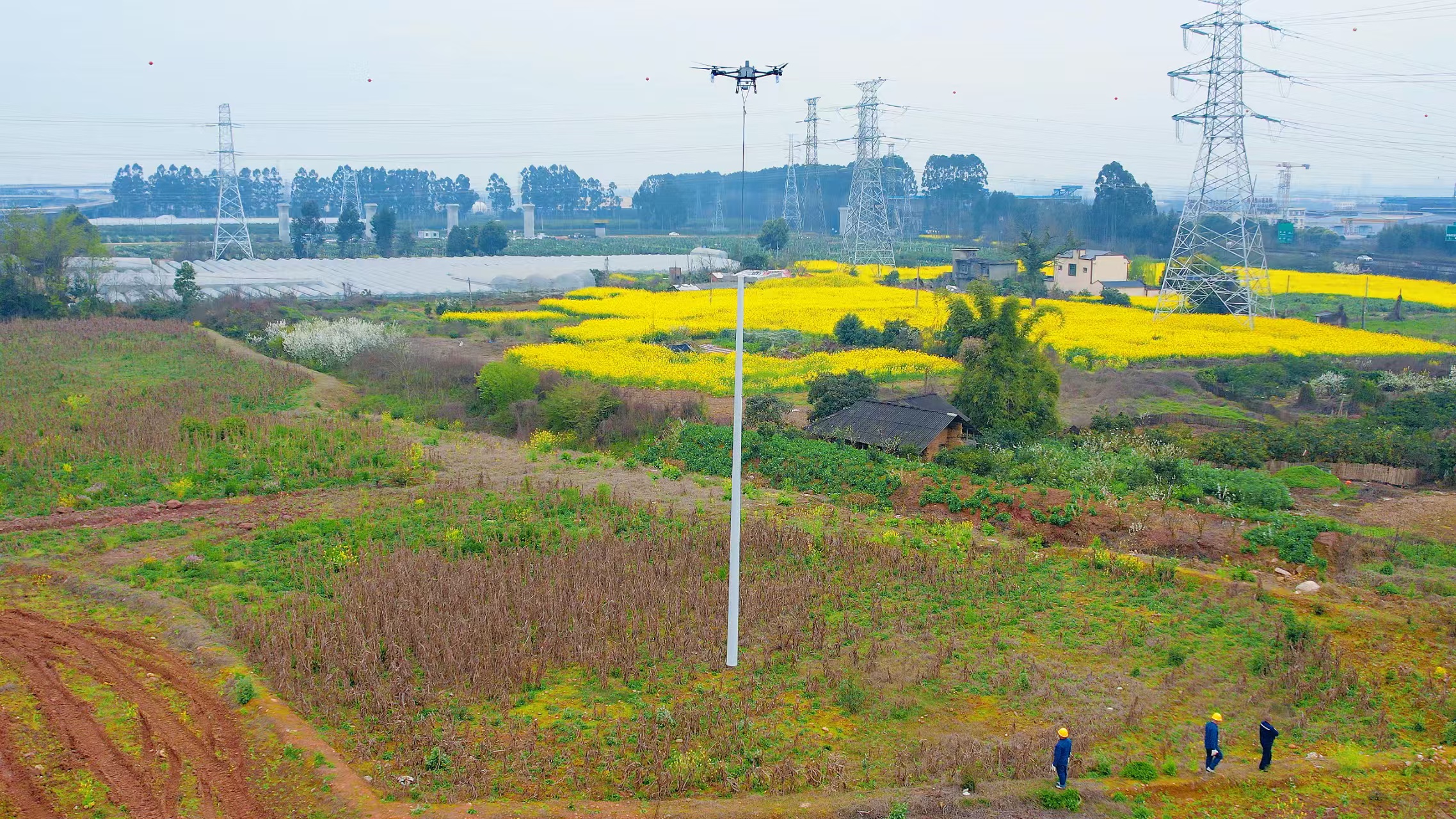
- Drone-transportable: light single-pole weight can be air-lifted to inaccessible areas, cutting transport and construction cost;
- UV-resistant gel coat: an exterior weatherable gel coat resists strong South American sunlight, extending service life.
Material & Filament-Winding Process
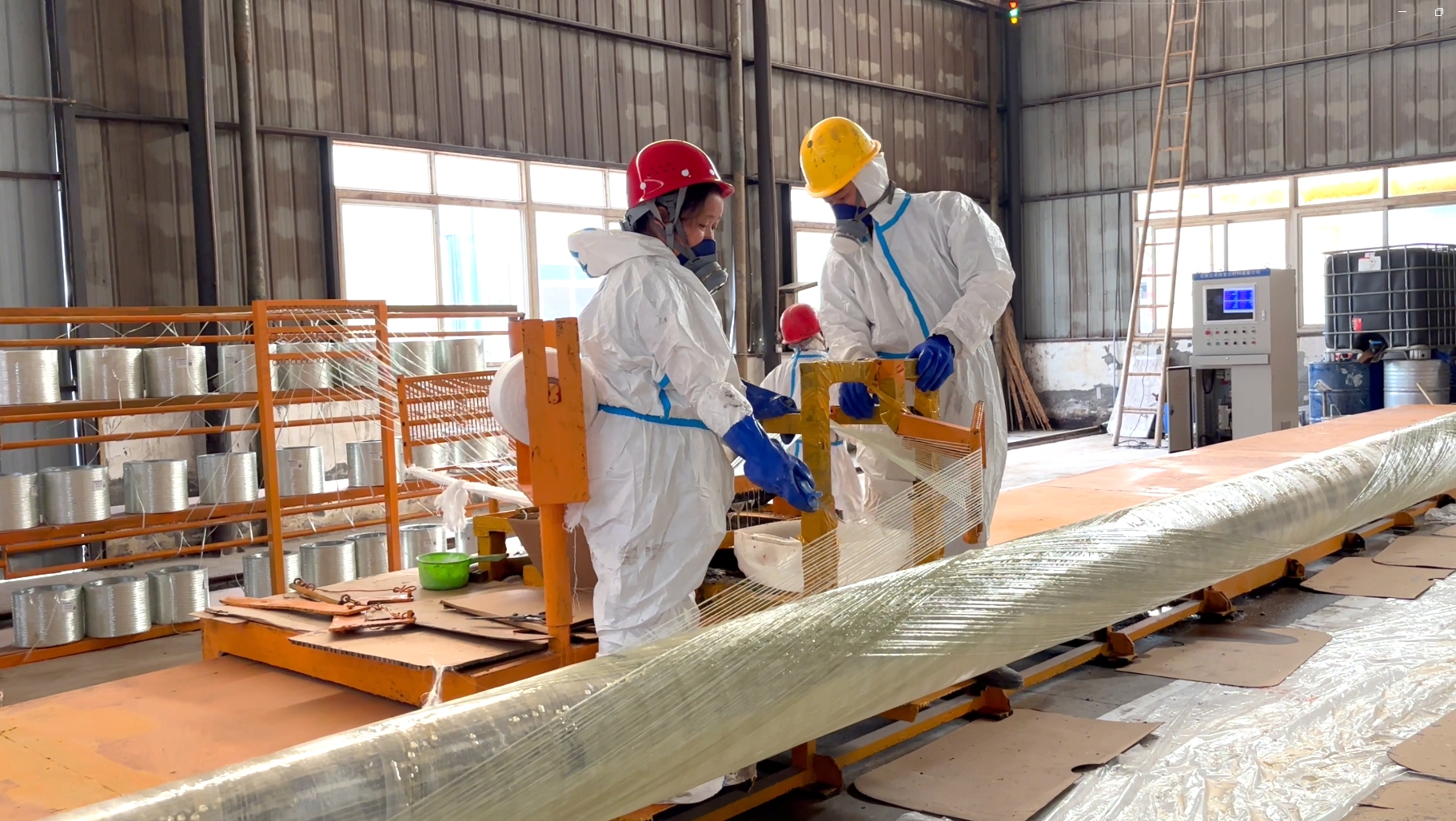
The FRP utility pole uses epoxy vinyl ester resin as the matrix, combined with glass fiber roving and glass fiber fabric, formed as one piece by filament winding. Vinyl ester resin offers better acid/alkali and aging resistance than ordinary unsaturated polyester, suited to long-term outdoor stressed environments for power lines. After forming, a UV-resistant gel coat is sprayed on the surface for weatherability and appearance durability.

Lightweight Design & Drone Transport
Thanks to the low specific gravity of FRP, the whole pole weighs far less than a concrete pole. In Guyana’s mountainous and wetland areas with poor road access, the client uses drones to lift and place poles, avoiding the high cost of conventional heavy transport vehicles and greatly saving transport and construction investment.

Production & Quality Control
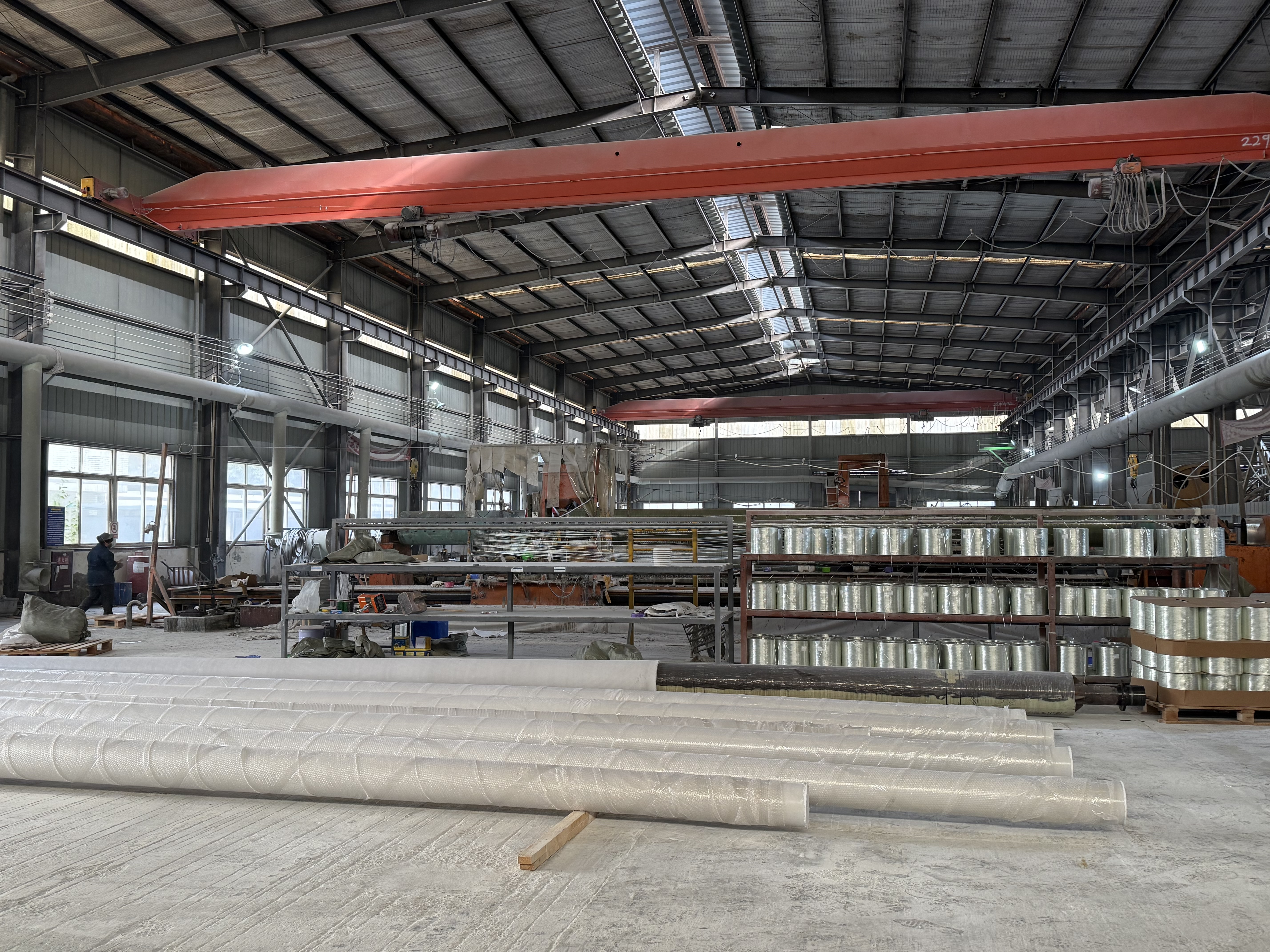
The production flow covers mold preparation, filament winding, curing, demolding, surface grinding, UV gel-coat spraying and outgoing quality inspection. Every process is controlled to power-line standards for strength, straightness and appearance consistency.

Main Quality Control Steps
- Load testing: bending and load tests on finished poles verify bearing and flexural capacity;
- Appearance & dimension inspection: check winding uniformity, gel-coat completeness and dimensional tolerance.

Production Video
The following is real footage of FRP utility pole production, covering winding, curing and surface treatment.
Results
- Delivered 12 m and 10 m FRP utility poles to the Guyana client, with A/B weight-grade selection;
- Vinyl ester resin + filament winding ensures pole strength and corrosion resistance;
- Lightweight design with drone transport significantly cuts local transport and construction cost;
- Exterior UV gel coat improves outdoor durability for South America’s hot, humid, high-sunlight climate.
Need custom FRP utility poles or composite poles?
We provide one-stop custom services — from spec design and filament winding to weather-resistant gel-coat spraying — supporting multiple pole lengths and load grades. Contact us for a quote and a solution.