

Introduction: The Numbers Behind Raceway Aquaculture
Three raceways, each 25 meters long, sit inside a 70 m × 15 m pond. They occupy less than a quarter of the water surface, yet they carry the entire crop: 60,000–75,000 largemouth bass, harvested at 22.5–30 tonnes per cycle.
This is an in-pond raceway system (IPRS): fixed flow channels built inside an ordinary earth pond, paired with an ecological purification zone and IoT monitoring. The figures come from a reference design our engineering team prepared for a 1,050 m² site.
The sections below break the design down the way a farm owner or contractor needs it: layout, water loop, stocking numbers, equipment and daily operation. No theory first — the figures come from a buildable plan.
1. In-Pond Raceway System: Definition and Working Principle
A traditional pond spreads fish across the whole water column and lets nature do the stirring. An in-pond raceway system concentrates fish in fixed channels where current flows in one direction, like a river. Fish swim against it, and both growth and flesh quality respond.
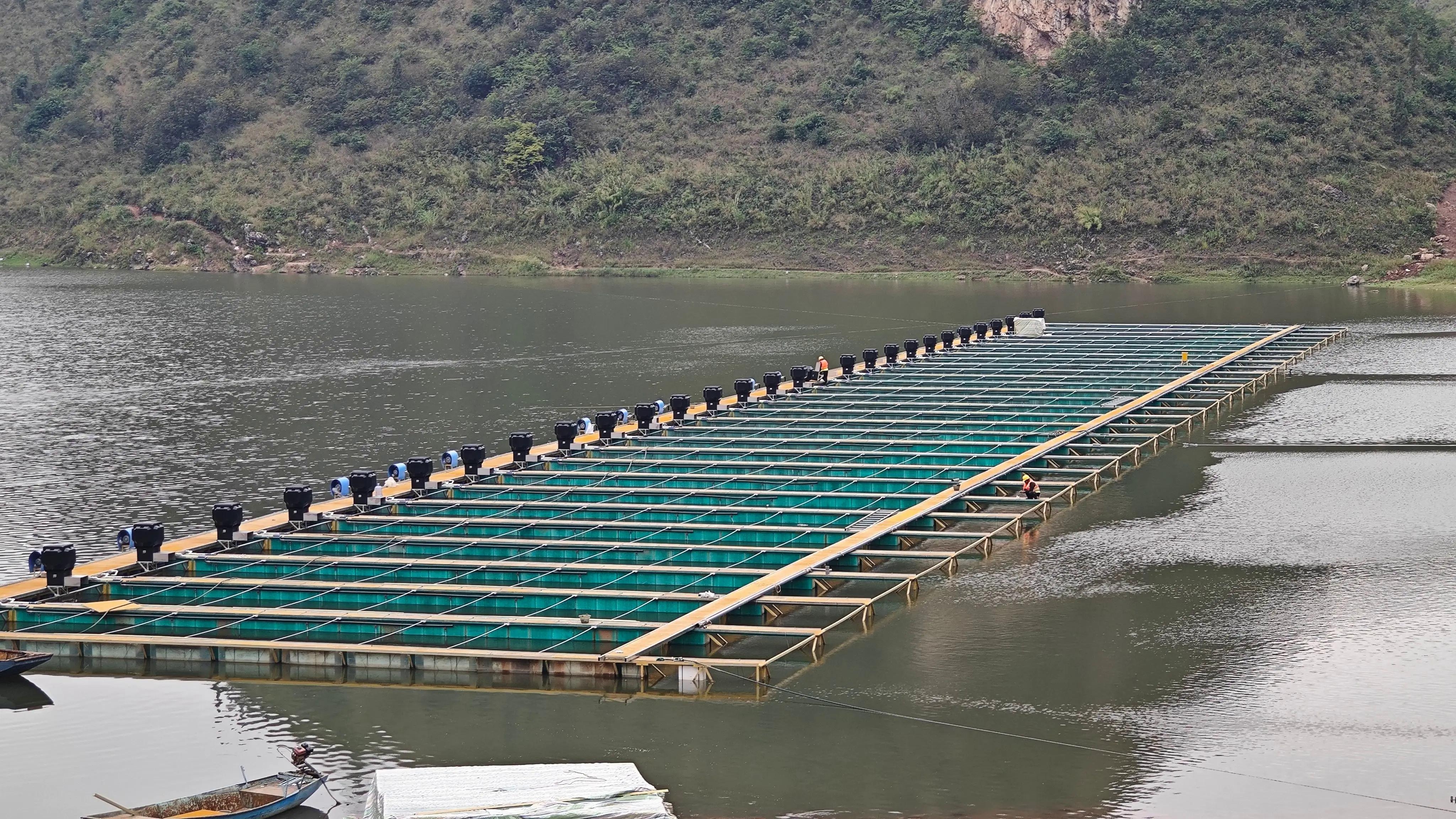
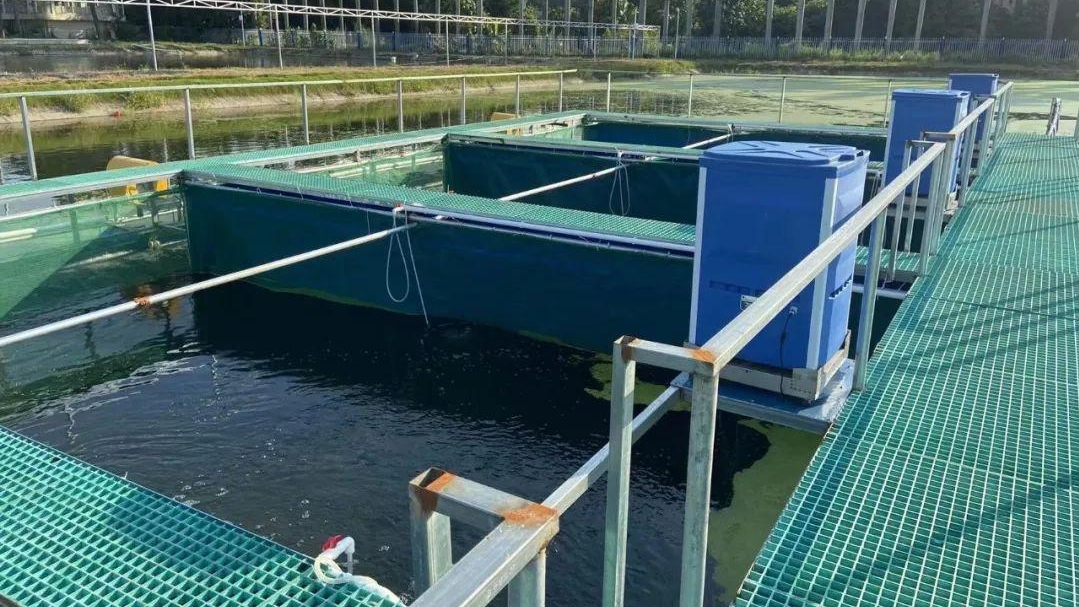
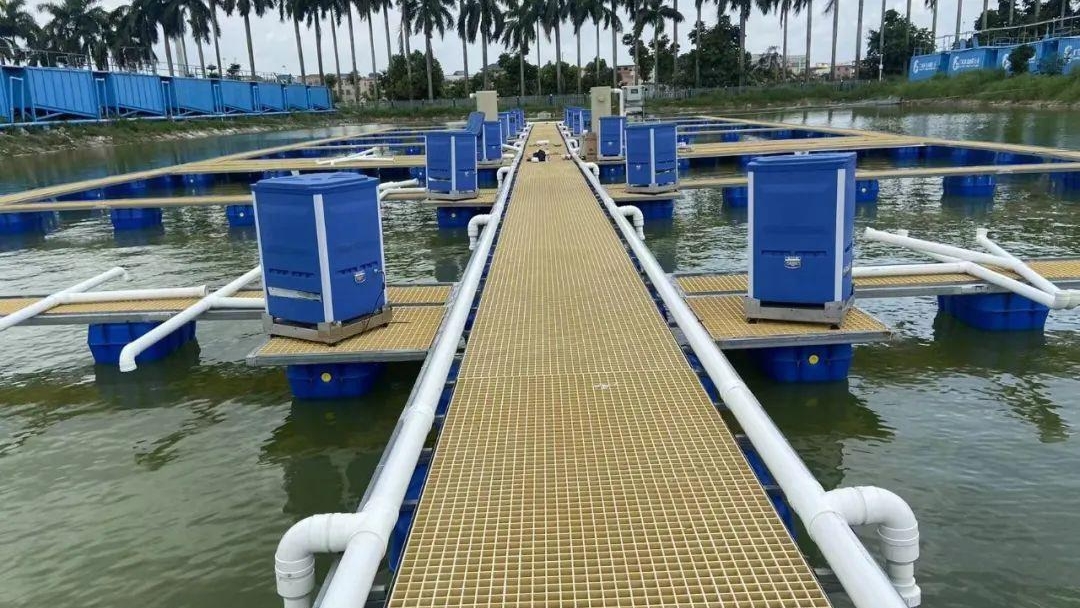
The same trough assembly of an in-pond raceway system is not limited to earth ponds: it is also installed in reservoir bays and sheltered river sections, where the open water takes over the purification role.
How the Water Moves
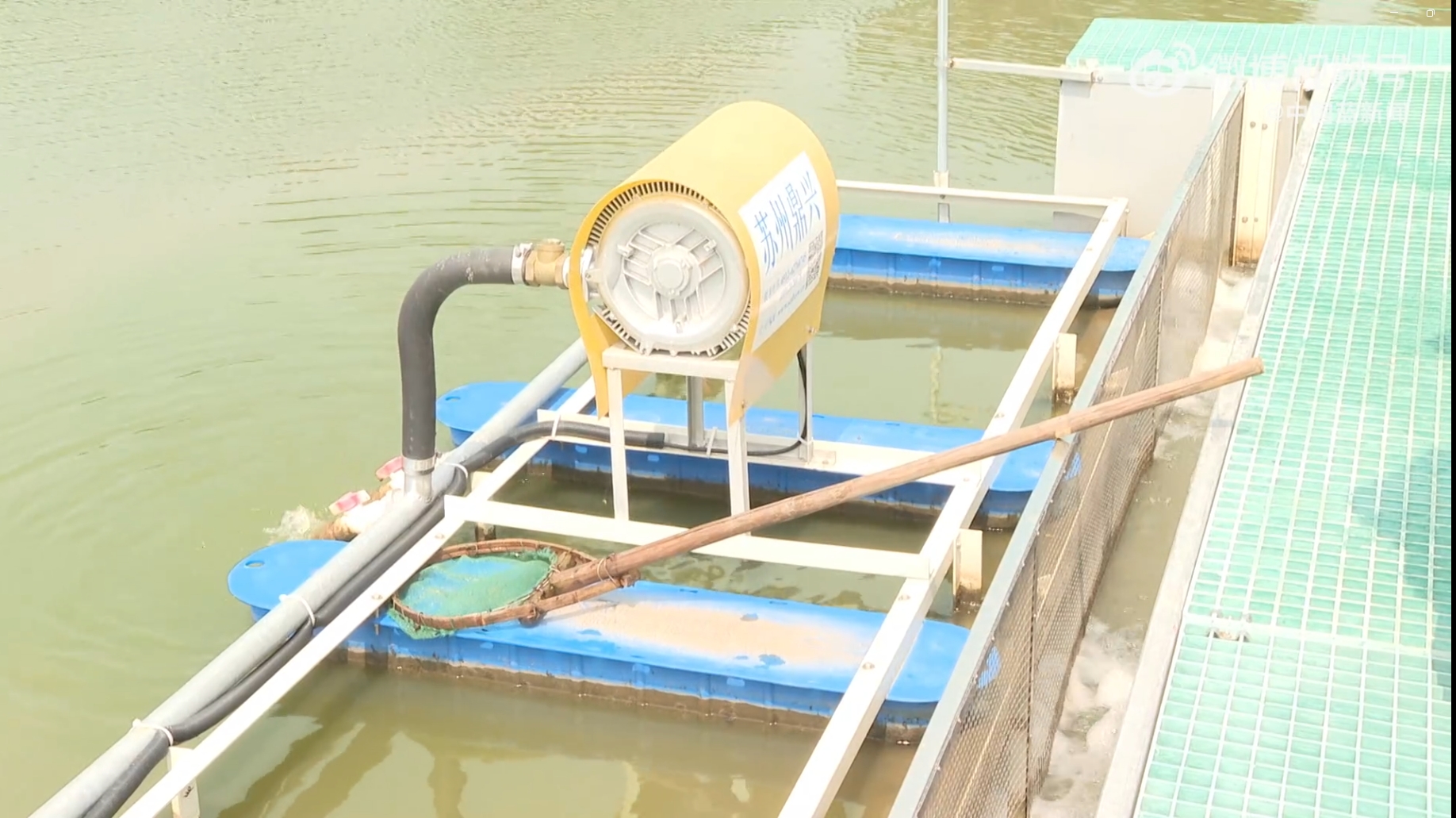
Airlift water-pushing aerators at the head of each channel generate a controlled current of 0.1–0.3 m/s. Water travels the full 25-meter length, is collected at the downstream end, cleaned, and returned. Oxygen stays high along the whole channel instead of collapsing overnight, as it can in still water.
Why an In-Pond Raceway System Raises Yield
- Confinement raises carrying capacity: an in-pond raceway system fits 20,000–25,000 fry into a single 312.5 m³ channel.
- Swimming against current firms the flesh and evens out growth rates across the batch.
- Waste is captured at the channel end rather than settling across the pond bottom.
- Harvest and grading happen in one place, without seining the whole pond.
2. Layout Design: Raceways and Ecological Purification Zones
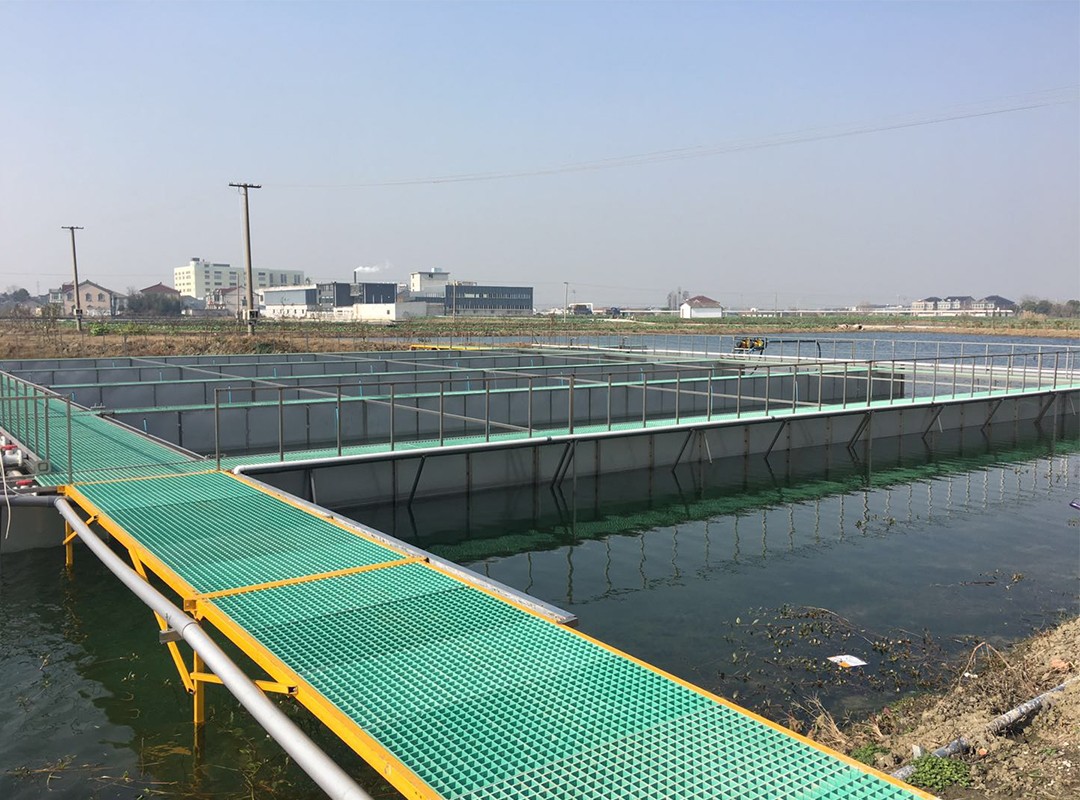
The reference layout turns the 70 × 15 m pond into three functional strips, and the zoning is what keeps an in-pond raceway system in water balance. Culture, walkways and biological filtration share one pond instead of competing for it.
The Four Zones
- Raceway zone: three parallel channels, each 25 × 5 × 2.5 m — about 312.5 m³ per channel, 937.5 m³ in total.
- Operation zone: 2–3 m walkways beside every channel, so feeding, patrols and harvest never require entering the water.
- Purification zone: the remaining pond area, stocked with filter-feeding fish such as silver carp to graze on plankton and polish the water.
- Equipment zone: power supply, control cabinet and standby generator grouped on the bank for one-point management.
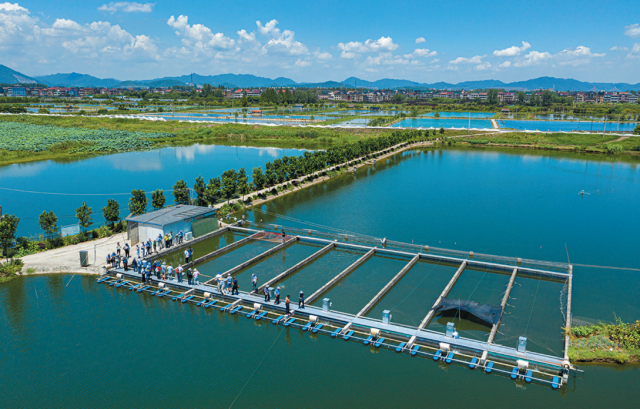
Culture and filtration therefore share the same water twice over. The same liter first carries the growing fish, then passes through the purification zone, and re-enters the channels — the core economy of an in-pond raceway system.
3. Water Management in an In-Pond Raceway System
Water quality is where the system earns its keep. The loop runs in four steps — push, collect, separate, reuse — and each step removes a specific pollutant before the water circulates back.
The Four-Step Loop
- Push: 2.2 kW variable-frequency airlift aerators keep water and oxygen moving through every channel.
- Collect: bottom suction units gather uneaten feed and feces at the downstream well of each channel.
- Separate: a solid–liquid separator rated at 5–10 m³/h strips the solids out of the slurry.
- Reuse: the purification zone strips dissolved nutrients before water re-enters the raceways.
Sludge is drained two to four times a day, ideally one to two hours after feeding when the waste load peaks. Removing solids before they dissolve is what allows an in-pond raceway system to keep discharge far below a conventional pond's.
Managed this way, the loop approaches a closed circuit: top-up water only replaces evaporation, and the surrounding community sees almost no effluent from the farm.
4. Stocking Plan and Yield of an In-Pond Raceway System
The reference plan stocks largemouth bass, the default high-value species for raceway farming. Yellow catfish, channel catfish and large-size grass carp are workable alternatives, as long as the species tolerates current, crowding and formulated feed.
The Reference Numbers
- Stocking: 20,000–25,000 fry (5–8 cm) per channel; 60,000–75,000 across three channels.
- Survival: at least 85% under normal operation.
- Cycle: 8–10 months from stocking to market size of 0.4–0.5 kg per fish.
- Harvest: 7.5–10 tonnes per channel — an in-pond raceway system crop totals 22.5–30 tonnes.
The design credits the in-pond raceway system with roughly 25% higher production per unit area than stocking the same pond conventionally. What that volume is worth depends on species choice and the local market, so the plan should be read as a production target rather than an earnings figure.

5. Equipment List and Smart Control
Fish in an in-pond raceway system depend entirely on machine-driven flow and aeration, so the equipment list is short but non-negotiable. The reference design specifies the following core set.
| System | Equipment | Specification | Qty |
|---|---|---|---|
| Water propulsion | Airlift water-pushing aerator | 2.2 kW, variable frequency | 3 |
| Feeding | Automatic feeder (air-assisted) | ≥100 kg hopper, timed dosing | 3 |
| Waste collection | Bottom suction unit | Connected to channel-end well | 3 |
| Waste treatment | Solid–liquid separator | 5–10 m³/h | 1 |
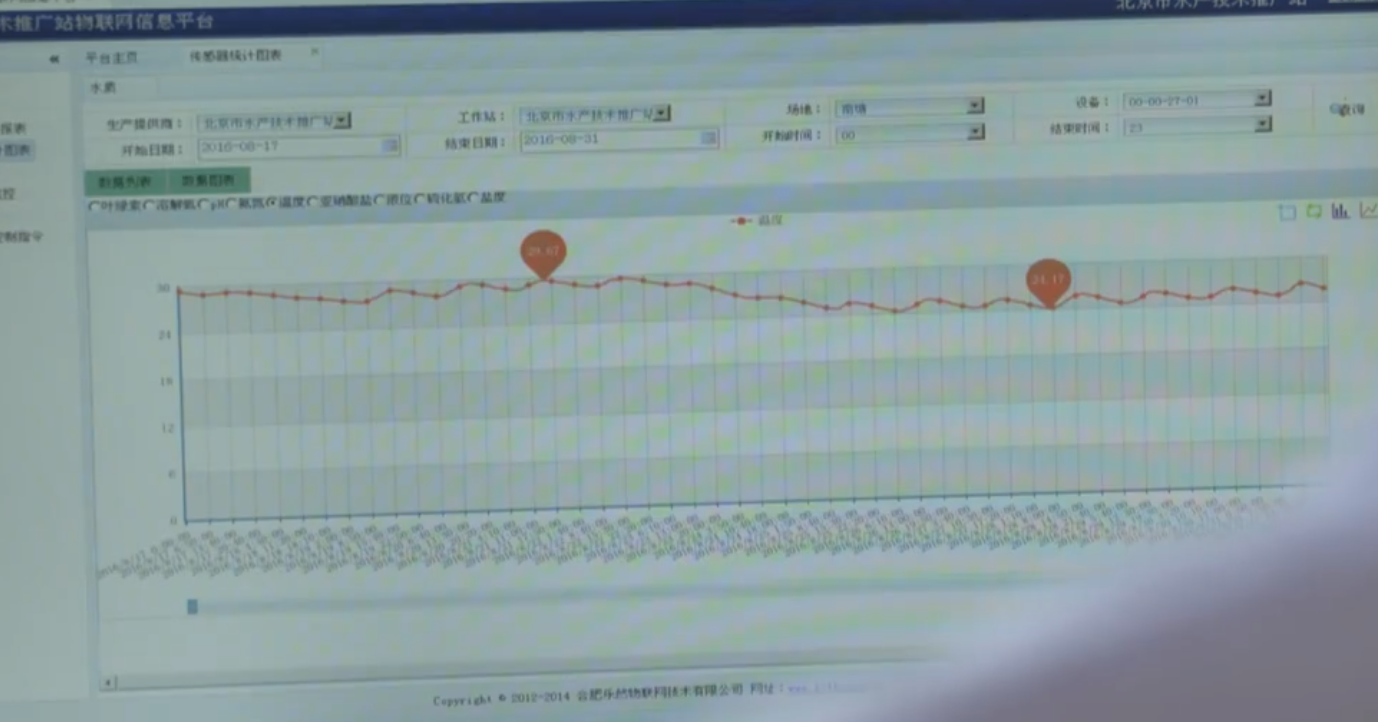
| Monitoring | Online water monitor | Dissolved oxygen, temperature, pH | 1 set |
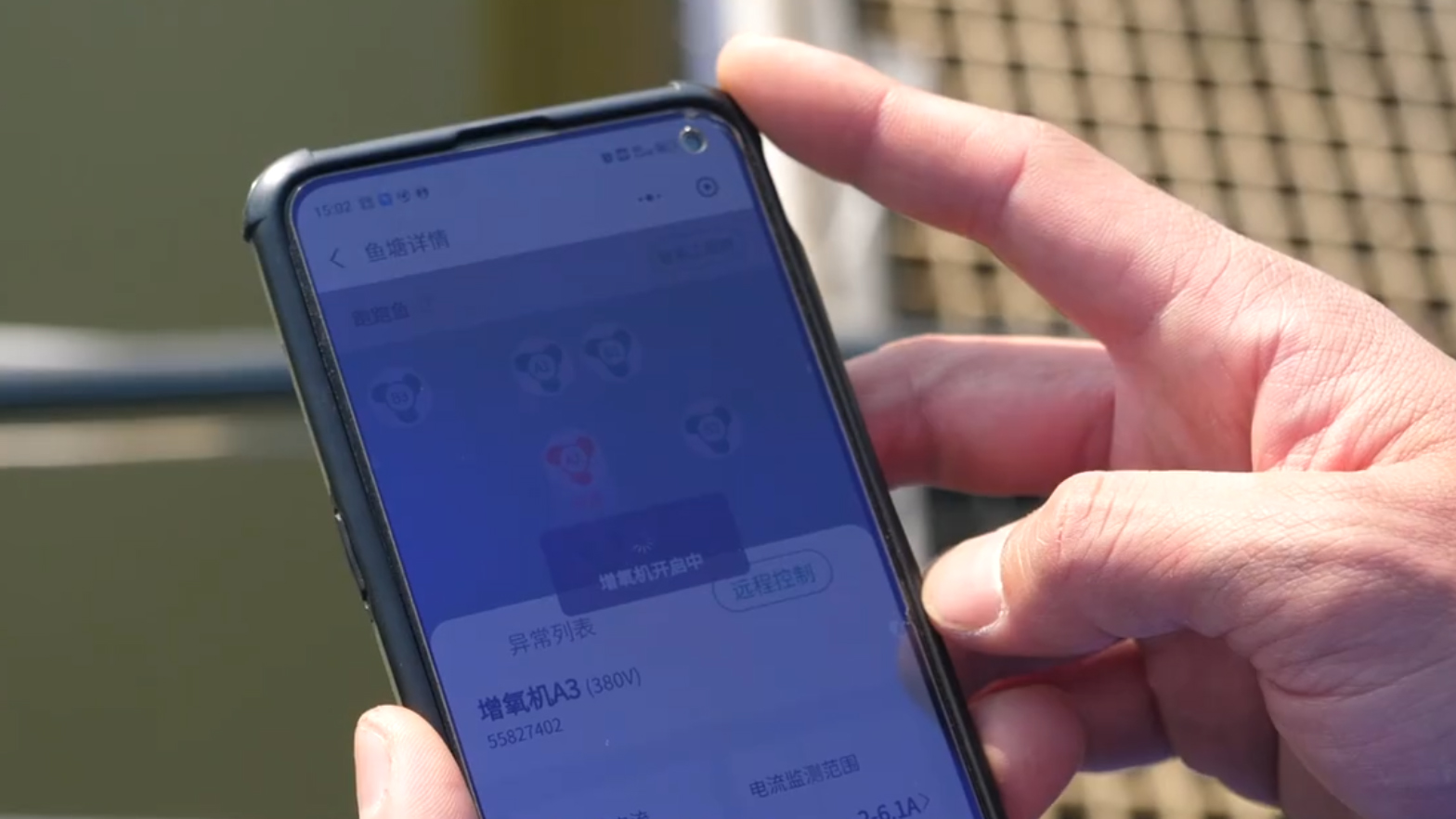
| Control | IoT platform | Control cabinet + phone app | 1 set |
| Emergency backup | Diesel generator | 20 kW; backup diffuser aeration 1.5 kW | 1 |
Day-to-day care of an in-pond raceway system comes down to three checks: dissolved oxygen above 5 mg/L, fish feeding behavior, and equipment status. Sensors stream readings to a phone app and raise automatic alarms, so one or two workers can run the whole site.
The IoT platform does more than display numbers: aerators can be switched on and off from a phone app, and abnormal values trigger push alarms. With that level of control, an in-pond raceway system tolerates a short absence far better than an open pond.
6. Side-by-Side: In-Pond Raceway System vs. Traditional Pond
| Dimension | In-Pond Raceway System | Traditional Pond |
|---|---|---|
| Culture space | Fixed channels, about a quarter of the surface | Whole pond, free range |
| Yield per unit area | About 25% higher than the same pond stocked conventionally | Baseline |
| Water exchange | Internal loop; top-up only for evaporation | Periodic exchange, effluent discharged |
| Waste handling | Suctioned daily, separated on site | Settles into pond sediment |
| Feeding | Timed, metered, app-monitored | Manual, experience-based |
| Power dependence | High; standby generator required | Low; natural aeration possible |
| Best fit | High-value species, small land base, strict discharge rules | Extensive culture where land and water are abundant |
The trade-off is real: an in-pond raceway system needs reliable electricity, disciplined sludge removal and closer management. Where those inputs exist, it converts them into higher and more predictable output per square meter.
7. FAQ: In-Pond Raceway System
Q1. Which fish species suit an in-pond raceway system best?
Largemouth bass is the first choice for its market value and its tolerance of current and crowding. Yellow catfish, channel catfish and large-size grass carp also perform well. The rule: pick high-value species that swim strongly, school and accept formulated feed.
Q2. Does an in-pond raceway system still need water exchange?
Routine exchange is largely eliminated. Solids are suctioned out daily and the purification zone strips dissolved nutrients, so the loop runs with only occasional top-up for evaporation, and discharge falls to a fraction of a conventional pond's.
Q3. What happens during a power cut?
In an in-pond raceway system, flow stops within minutes, so standby power is mandatory equipment, not an option. The design pairs a 20 kW diesel generator with backup diffuser aeration, and the monitoring system raises an automatic alarm when oxygen or flow drifts out of range.
Q4. Can a farm start an in-pond raceway system with fewer than three raceways?
Yes, and it is the recommended path. Run one or two channels for a full cycle to build operating skill before scaling up to the full layout, and ask local agricultural authorities whether subsidy programs apply in your region.
References and Further Reading
Planning an In-Pond Raceway System?
ToSun manufactures modular FRP raceway panels, tanks and complete water-treatment equipment from its own production line. Send us your pond dimensions and target species, and our engineers will return a layout proposal and equipment list.
Talk to Us →