
Introduction: Two Routes, One Choice
On the road to turning livestock and rural wastewater into usable energy, two technical routes have long coexisted: the on-site built traditional brick biogas digester, and the factory-molded SMC biogas digester made of fiber-reinforced plastic (FRP). The former wins on locally available materials and a familiar building craft; the latter stands out for its modular design, corrosion resistance, and long service life. From a technical-document perspective, this article puts the pros and cons of both side by side in one table — and highlights a frequently underestimated fact: biogas can absolutely serve as a clean daily cooking fuel for households, and with proper management, cattle manure and fruit-and-vegetable waste are both excellent fermentation feedstock.
1. Two Routes: Brick vs SMC Biogas Digester
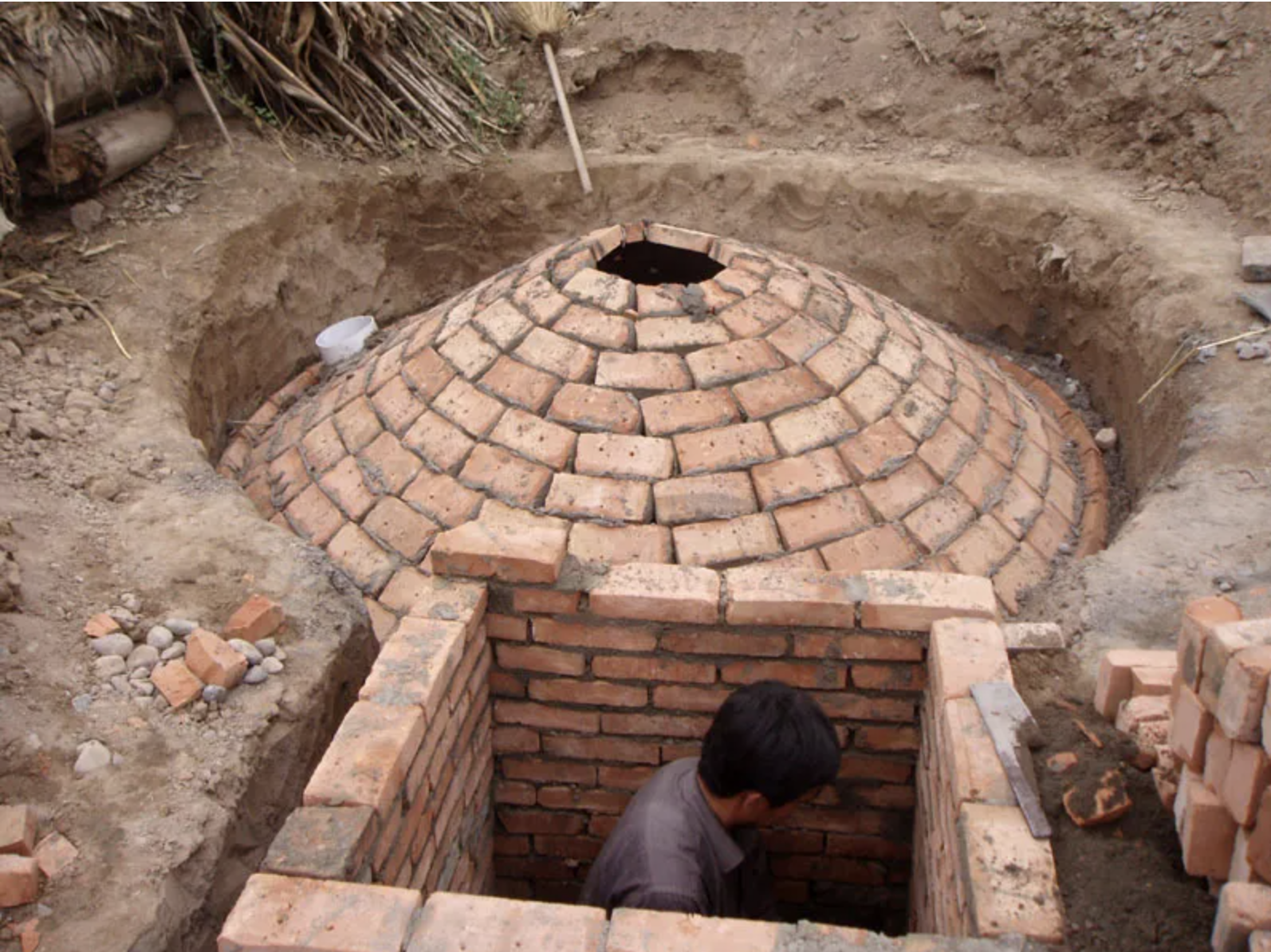
Traditional Brick / Brick-Concrete Digester
Built from red brick and cement on site by local masons, often finished with a rendered waterproof layer. Its strengths are locally available materials, low upfront cost, and a familiar craft — which is why it has long been the mainstream choice in flat regions with plenty of masons and easy transport. The weaknesses are just as clear: on-site building takes a long time (7–10+ days), quality depends heavily on the mason’s skill, the shell easily cracks and leaks (polluting groundwater), life is about 15 years, and frequent repairs are needed after commissioning.

SMC Biogas Digester (FRP Molded)
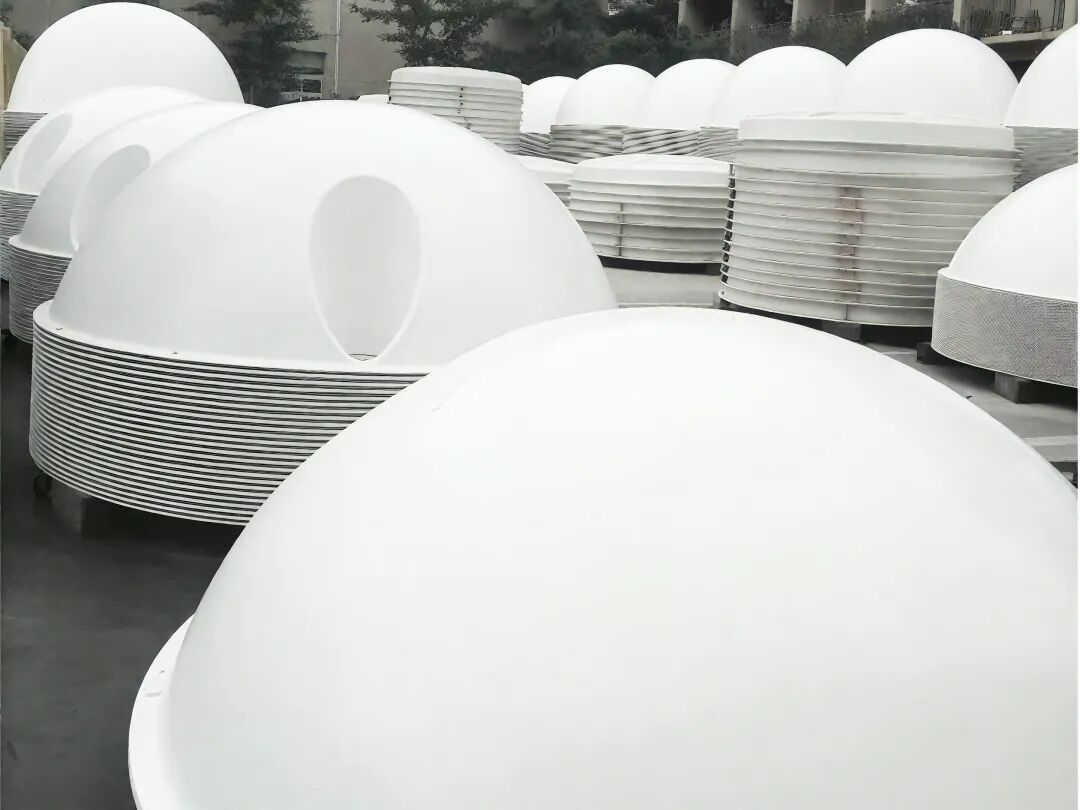
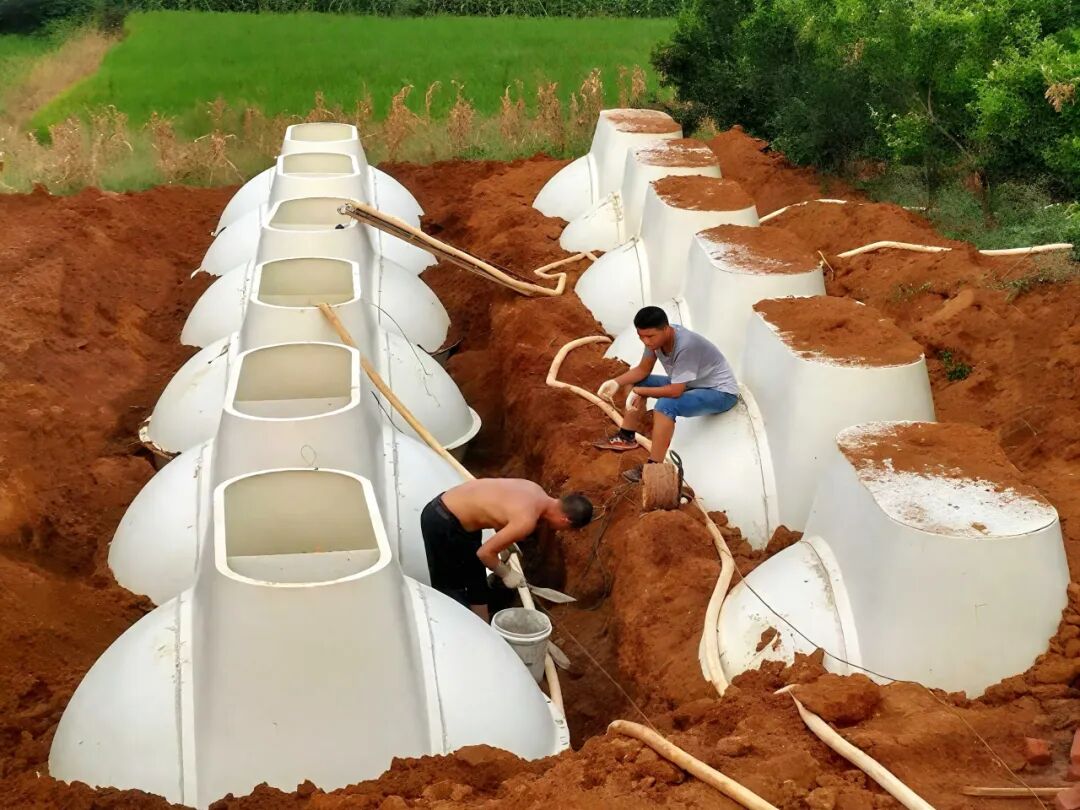
An SMC biogas digester is molded by large hydraulic presses at high temperature; it features a modular design that splits for transport and assembles quickly on site. A two-person team can complete an 8 m³ unit in one day, and material transport drops by 70%. The seamless FRP shell leaks almost nothing, the design life is about 50 years, and machine production keeps every SMC biogas digester consistent — independent of the builder’s skill.
The Fermentation Path: 5 Steps from Waste to Fuel & Fertilizer
Anaerobic fermentation route (sealed, no aeration required):
- Feed: rural human, livestock and poultry manure plus domestic sewage enter the tank.
- Hydrolysis & acidification: large organic molecules are broken down into smaller acids.
- Acetogenesis: acid products are further converted into acetate, hydrogen and carbon dioxide.
- Methanogenesis: methanogens turn acetate / CO₂ into biogas (mainly methane).
- Output: biogas fuels cooking and lighting; slurry and residue return to the field as organic fertilizer.
2. Key Comparison: One Table
| Dimension | Traditional Brick Digester | SMC FRP Molded Digester |
|---|---|---|
| Construction | Built on site; depends on mason skill | Factory molded; modular on-site assembly |
| Build time | 7–10+ days | 2 people, 1 day for 8 m³ |
| Transport | Heavy brick/cement; hard on mountain roads | Modular; transport reduced ~70% |
| Sealing & leakage | Cracks easily; leaks, pollutes groundwater | Seamless shell; near-zero gas leakage |
| Consistency | Varies with skill; unstable yield | Machine-made; ~20% higher yield |
| Service life | ~15 years; frequent repairs | ~50 years; virtually maintenance-free |
| Upfront cost | Low (but higher lifecycle cost) | Higher (but cheaper overall) |
| Best for | Flat areas with masons & easy transport | Remote, mountainous, hot & termite-prone |
Note: brick digesters still hold value on “low upfront cost and local buildability”; SMC’s edge is in lifecycle cost, sealing and consistency — better suited to scale and remote deployment.
3. Household Energy: SMC Biogas Digester for Cooking & Feedstock
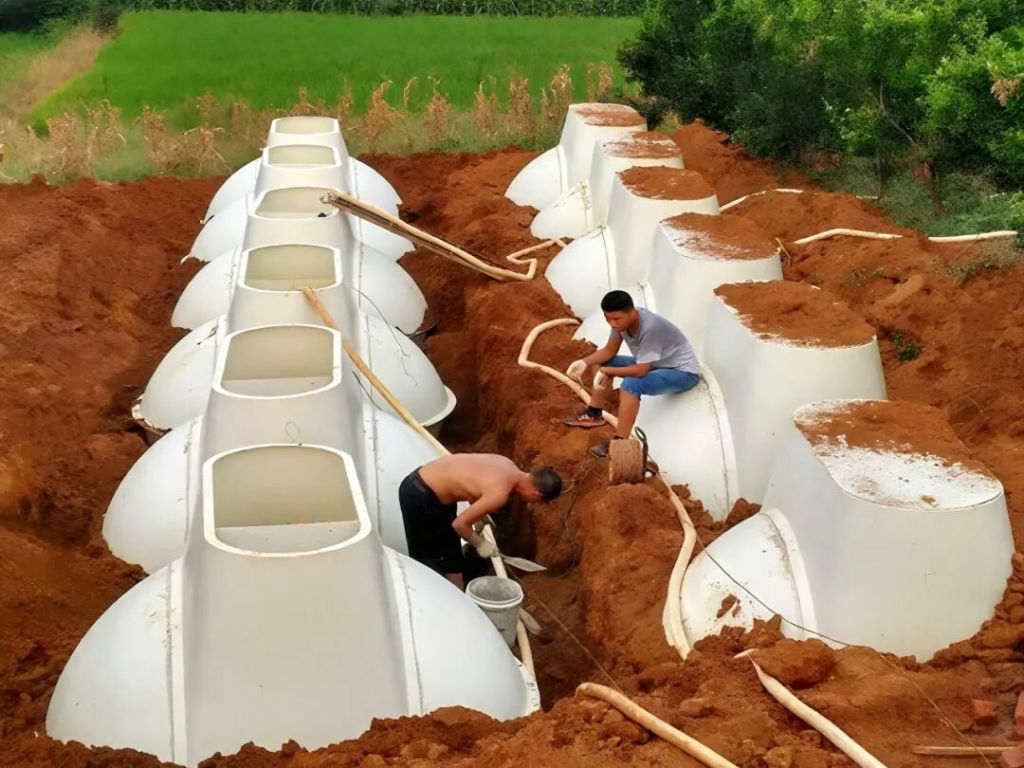
Many people picture biogas only as a “big project at a farm,” yet biogas from an SMC biogas digester can absolutely be a clean daily cooking fuel for the home. As the hero image shows, the household SMC biogas digester’s gas-storage tank seals tightly with near-zero leakage; a single tank comfortably supplies the daily cooking and lighting of a 3–5 person family. An 8–10 m³ SMC biogas digester yields 0.3–0.5 m³ of biogas per day — enough for cooking and lighting — while the slurry can be used directly to water the vegetable garden.

Cattle Manure and Fruit/Vegetable Waste as Feedstock
With good management, feedstock is not limited to livestock manure. Cattle and pig manure, as well as fruit-and-vegetable waste (leaves, peels and other kitchen/farm residues), all work as fermentation feedstock. The key is balance and upkeep:
- C/N ratio: manure supplies nitrogen, vegetable waste supplies carbon; a sensible mix keeps microbes productive.
- Regular feed & draw: keep the tank active; avoid “only in, never out” acidification stalls.
- Sealed & right temperature: the FRP tank performs steadily from -30°C to 80°C; insulate in winter.
- Proper stirring: promotes mixing and lifts gas yield.
Managed well, “waste” becomes steady “fuel.” Inside an SMC biogas digester, one pig’s manure yields 30–50 m³ of biogas a year — equivalent to saving 150–250 RMB in coal — while the slurry and residue make a quality organic fertilizer that cuts chemical use by 30% per mu and raises grain yield by 5%–10%.
4. Why the SMC Biogas Digester Wins in Most Scenarios
Taking each dimension in turn, the case for the SMC biogas digester is clear:
- 50-year service life: FRP resists corrosion and aging with no metal to rust; versus brick/concrete at ~15 years, you replace the equipment 2–3 fewer times over a lifetime.
- Pollutants destroyed: fermentation kills 99%+ of parasite eggs and E. coli; after pilots in Gansu and Xinjiang, rural intestinal-disease rates fell about 60%.
- Dual benefit: biogas as fuel and slurry/residue as fertilizer deliver pollution control and extra income together.
- Low maintenance: virtually maintenance-free, eliminating the frequent patching brick tanks need.

5. Use Cases: Homes, Farms and Overseas
📌 Household: an 8–10 m³ SMC biogas digester fits a 3–5 person family, taking toilet, kitchen wastewater and a little livestock manure; it yields 0.3–0.5 m³/day for cooking and lighting, with slurry watered straight onto the vegetable plot. (This household size shares the same SMC molding process as the cases below.)

6. Industry Trends: From Pollution Control to Green Energy
- Decentralized treatment becomes a must. Remote villages lack pipe networks and centralized plants are uneconomic; modular, rapidly deployable units like the SMC biogas digester fill the gap — especially on rugged mountain roads.
- Biomass revalued under dual-carbon goals. Livestock manure and vegetable waste are both pollutants and renewable fuel; an SMC biogas digester turns “treatment cost” into “biogas + fertilizer” dual income and fits the rural-energy transition.
- South-South cooperation opens export room. Across hot, termite-prone regions of Southeast and South Asia, the SMC biogas digester fits exceptionally well and is becoming a preferred choice for rural-energy aid and commercial export.
7. Frequently Asked Questions
What exactly differs between the SMC biogas digester and a brick one?
The core gaps are construction, sealing, life and consistency: brick relies on masons, cracks and leaks, and lasts ~15 years; the SMC biogas digester assembles modularly, is seamless, lasts ~50 years, and performs consistently. See the table above.
Can biogas really be used for cooking at home?
Yes. The household SMC biogas digester yields 0.3–0.5 m³/day, its storage tank seals reliably, and that is enough for a 3–5 person family’s daily cooking and lighting.
Do cattle manure and fruit/vegetable waste really work as feedstock?
They do. Manure (cattle, pig) supplies nitrogen; vegetable waste (leaves, peels) supplies carbon. Mixed sensibly with regular feeding, insulation and stirring, they produce gas steadily.
How long does installation take, and how many people?
An SMC biogas digester comes in three modules that split for transport and assemble on site; a two-person team finishes an 8 m³ unit in one day — far faster than the 7–10 days of brick building.
Which countries and regions is the SMC biogas digester suited to?
Beyond domestic homes and farms, the SMC biogas digester performs strongly in hot, termite-prone developing regions such as Nepal and the Philippines, fitting South-South cooperation energy projects.
Further reading:
Fiber-reinforced plastic (FRP) ·
Biogas overview
Want a custom biogas plan for your farm or village?
We provide SMC biogas digester specs, system design and overseas delivery support.